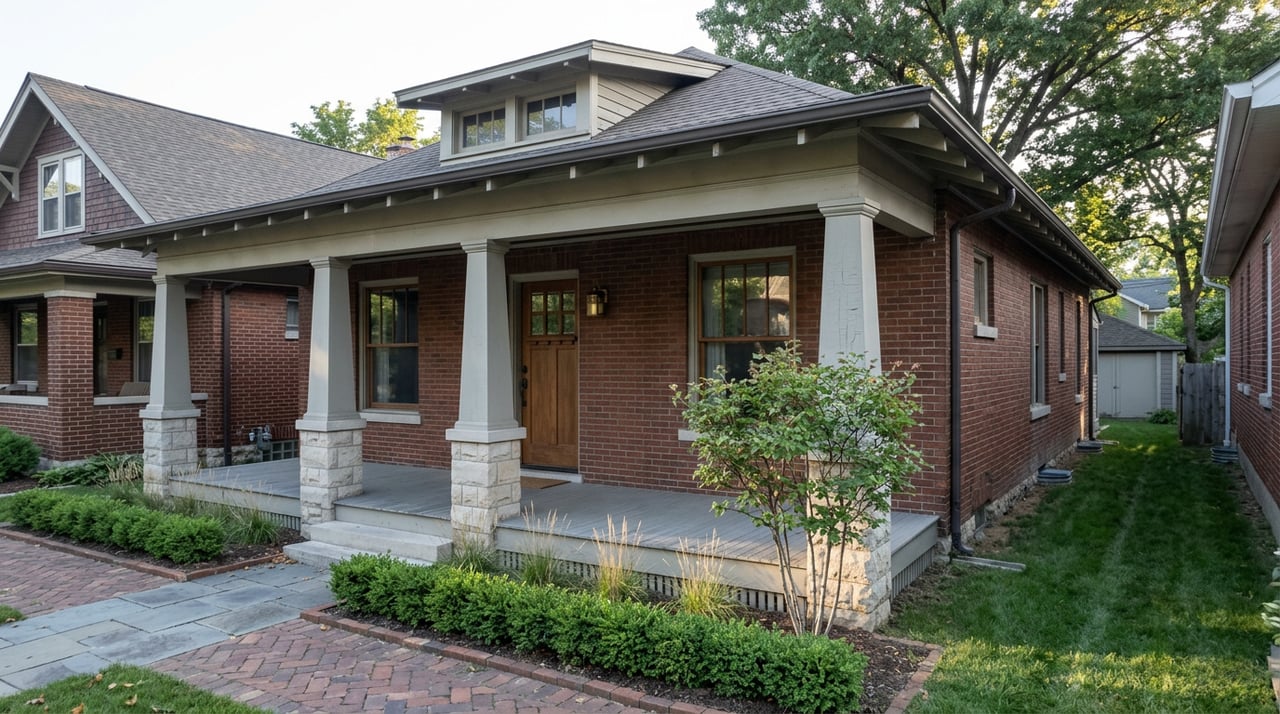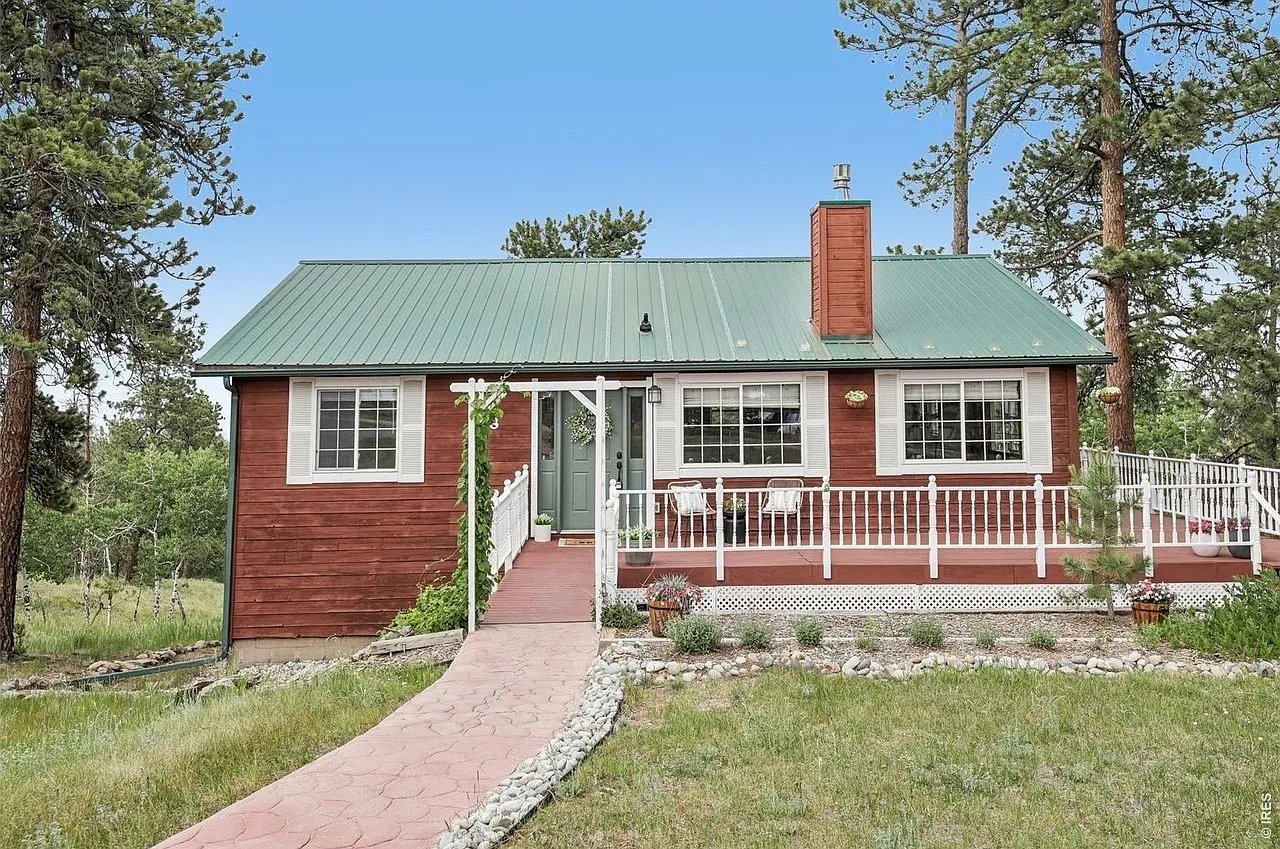
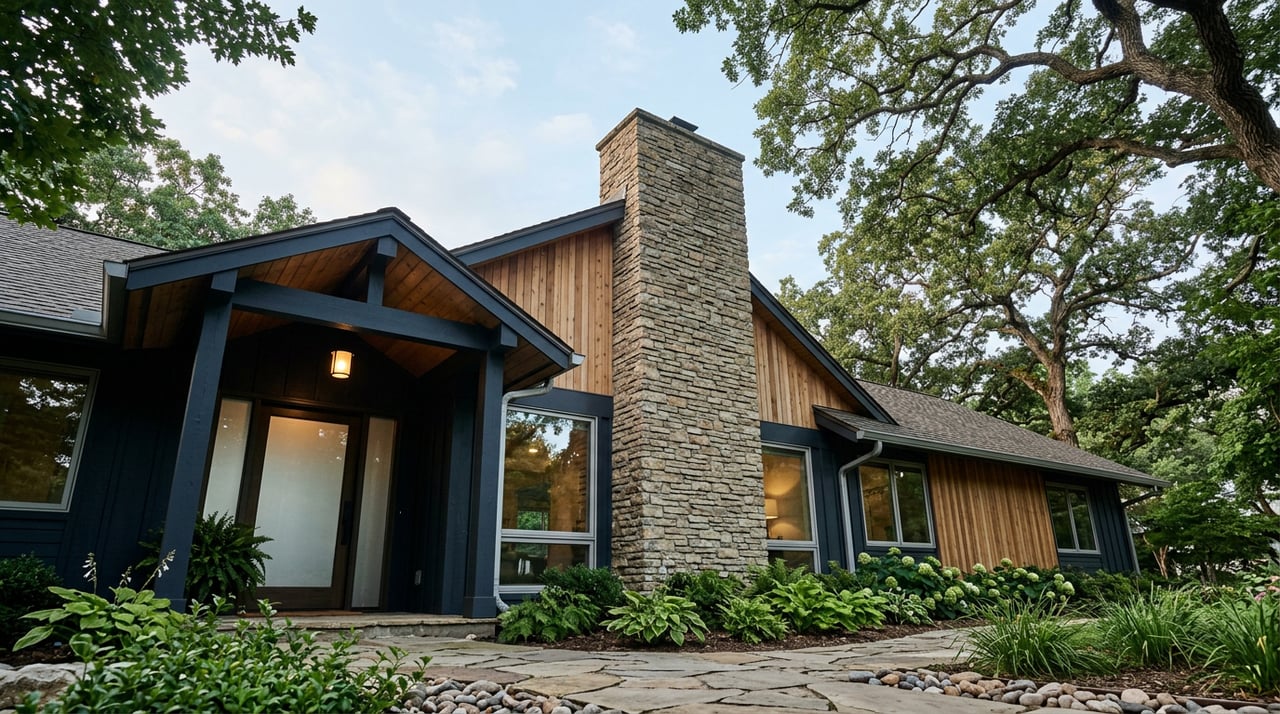
Two ranch homes list two streets apart in Applewood Mesa. Same era, same brick, same low-slung roofline that made this pocket of Golden famous among mid-century modern buyers. One closes in five weeks without a hiccup. The other stalls three days before closing when the title company asks for a document nobody on the sale side has ever heard of: a Jefferson County OWTS use permit.
Both homes passed inspection. Both had clean sewer scopes. The difference wasn't the pipes. It was what's underneath the yard, and how old it is.
Why Applewood Never Had One Water and Sewer Story
Applewood Mesa and its neighboring Echo Hills Ranchettes exist because a retired federal worker named Myron T. Bunger decided not to relocate. He'd bought an 80-acre apple orchard in 1933, and when he retired in 1953 instead of moving back to Washington, D.C., he and his engineer brothers Mill and Howard formed the Applewood Mesa Realty Company and started platting half-acre lots on the north slope of South Table Mountain, the same ridge that today separates the ranchettes from Clear Creek Valley below.
There was one problem. No water or sewer infrastructure reached that land in 1956. So the Bungers built their own, forming a separate company just to secure water rights and run private water and sewage service to the lots they were selling.
That single decision is why Applewood doesn't have one uniform utility story the way a platted city subdivision does. Homes went up between $25,000 and $85,000 at a time when the national average home price was $10,391, which tells you this was pitched as a premium enclave from day one, not an afterthought suburb. Builder Bud Kentz later worked with architect Joseph E. Krabacher to anchor custom homes on the steep hillside using concrete platforms, a technique distinctive enough that some of those Foothill Road properties are still cited as architectural landmarks. Later phases carried the Bunger name forward as Applewood Heights, Grove, Glen, and View, while developer Michael Leprino added Applewood Knolls through the 1960s and 70s.
None of that history means much to a buyer today until you get to the utility question. Some ranchette lots tied into that original private system and later connected to municipal sewer as it expanded outward. Others, particularly the more remote parcels descending toward Clear Creek Valley, still run on individual septic systems that predate any of the county paperwork built around them.
The Rule the County Wrote for Homes Built Exactly Like These
Jefferson County requires an inspection and a use permit before you can sell a property with an on-site septic system, but only if that system was installed more than five years before the sale date. That's the trigger. A five-year-old system is exempt. A system installed in 1961 is not, and the burden falls on whoever is selling to prove the system still works before the county will sign off on the title transfer.
In August 2023, Jefferson County adopted a separate set of OWTS permitting standards specifically for parcels that were lawfully created before June 3, 1966. Applewood Mesa broke ground in 1956. Echo Hills Ranchettes and the earliest sections of Applewood Heights and Grove followed close behind, through the 1960s. That means a meaningful share of the original ranchette-era lots in this neighborhood fall on the older side of a line the county only drew three years ago, which is a strange kind of timing: a rule adopted in 2023 that specifically singles out parcels platted in the exact years Applewood was built.
Most sellers never find out their lot sits on that side of the line until a title company flags it, usually during the same week they expected to close.
The Plumbing Everyone Expects, and the Line Nobody Scopes
Buyers and agents circling an Applewood ranch home tend to worry about the visible-enough risks: galvanized supply lines that corrode from the inside out, and clay or cast-iron sewer laterals from the 1950s and 60s that are vulnerable to root intrusion from the mature trees this neighborhood is known for. Those are real, and they're the reason a standard home inspection isn't the full picture. Both the International Association of Certified Home Inspectors and the American Society of Home Inspectors exclude underground sewer lines from a standard scope, which means the only way to actually see the condition of that lateral is a separate sewer scope inspection, run on its own line item.
In the Denver metro, that scope typically runs somewhere between $150 and $500, though full camera inspections with harder access can run higher, and Angi's Denver-specific data puts the average sewer line camera inspection at $748 with a range from $151 to $1,359. If the scope finds a failed lateral, replacement runs anywhere from $5,000 to $25,000 or more depending on depth, length, and whether the damage extends under a driveway or the street.
Septic inspections carry their own separate cost, averaging $582 in the Denver market with a typical range between $212 and $952. A properly installed system should last 25 to 40 years, and the county recommends pumping every three to five years to keep sludge from reaching the leach field. None of these numbers are dramatic on their own. What makes them matter in Applewood is that a seller who assumes "sewer" because the house looks like every other mid-century ranch on the block can be wrong, and won't find out until the permit search comes back.
| Item | Typical Denver-metro cost | Why it matters here |
|---|---|---|
| Sewer scope (municipal or septic-connected) | $150–$500, average $748 for full camera inspection | Not covered by a standard inspection; the only way to see the lateral |
| Failed sewer lateral replacement | $5,000–$25,000+ | Cost rises sharply if under a driveway or street |
| Septic system inspection | $212–$952, average $582 | Required by Jefferson County if system is over 5 years old |
| Septic pump-out | Recommended every 3–5 years | Skipping it accelerates leach field failure |
| Full repipe (galvanized to modern) | $4,000–$15,000 | Common in original 1950s–60s construction |
What This Means If You're Selling on a Ranchette Lot
The fix here isn't complicated, but it has to happen before you list, not after you're under contract.
- Check the county's septic record lookup before you set a listing date. Jefferson County's Environmental Health Services division maintains an online portal for septic tank locations and permit history, so you can find out in minutes whether a system is on file and how old it is.
- If the system is more than five years old, schedule the OWTS inspection as part of your pre-listing prep, not as a reaction to a buyer's request. A use permit takes time to process, and a title company will not close without it.
- Order a sewer scope regardless of whether the home is on septic or municipal sewer. The standard inspection won't touch it, and a clean scope is one of the strongest pieces of leverage you can hand a buyer's agent during negotiation.
- Pull together pump records and any prior repair invoices. Missing paperwork is what turns a routine inspection into a drawn-out one, since the inspector has no baseline to compare current conditions against.
- If your lot traces back to the original Applewood Mesa or Echo Hills platting, ask directly whether the 2023 legacy standard for pre-1966 parcels applies to your permit. It's a narrow rule, but it's the kind of detail that decides whether your closing takes three weeks or six.
FAQ
Does every home in Applewood have a septic system? No. The original Bunger-era water and sewage company connected many of the earliest ranchette lots to a private system, and later development brought municipal sewer to other sections. Whether a specific home is on septic or sewer depends on which phase of development it belongs to, which is why checking county records before listing matters more here than in a neighborhood built in one uniform phase.
How do I find out if my septic system is more than five years old? Jefferson County's Environmental Health Services division keeps permit and inspection records tied to each parcel, searchable through its septic system lookup tool. If no record exists, the county typically treats the system as needing inspection regardless of assumed age.
What if my home was built after 1966? The 2023 legacy standard applies specifically to parcels lawfully created before June 3, 1966. Homes on lots platted after that date fall under the county's standard OWTS use permit rules rather than the separate legacy framework, though the same five-year inspection trigger still applies.
Selling a mid-century home in Applewood means selling its infrastructure story along with its architecture. The pipes get attention because they're visible in an inspection report. The permit gets missed because it lives in a county database most sellers never think to check. Getting ahead of both is the difference between a closing that runs on schedule and one that stalls in its final week over paperwork that could have been handled a month earlier.
If you're weighing a sale in Applewood, or trying to figure out which side of that 1966 line your lot falls on, The Kissel Group can help you get the septic and sewer picture sorted before a buyer ever sees your listing.