A hundred-year-old bungalow on a Sunnyside block usually sells fast. The offer lands above ask. The buyer waives the appraisal gap and sometimes waives the inspection contingency entirely. Then, two or three weeks before closing, the one thing almost nobody waives comes back: the sewer scope. And the closing that felt finished isn't.
That sequence is worth understanding if you own one of Sunnyside's original-era homes and plan to sell it. The pipe underground was never really the problem. The problem is who finds out about the pipe first, and when they find out, because in Colorado that timing changes who controls the negotiation.
A neighborhood built before plastic pipe existed
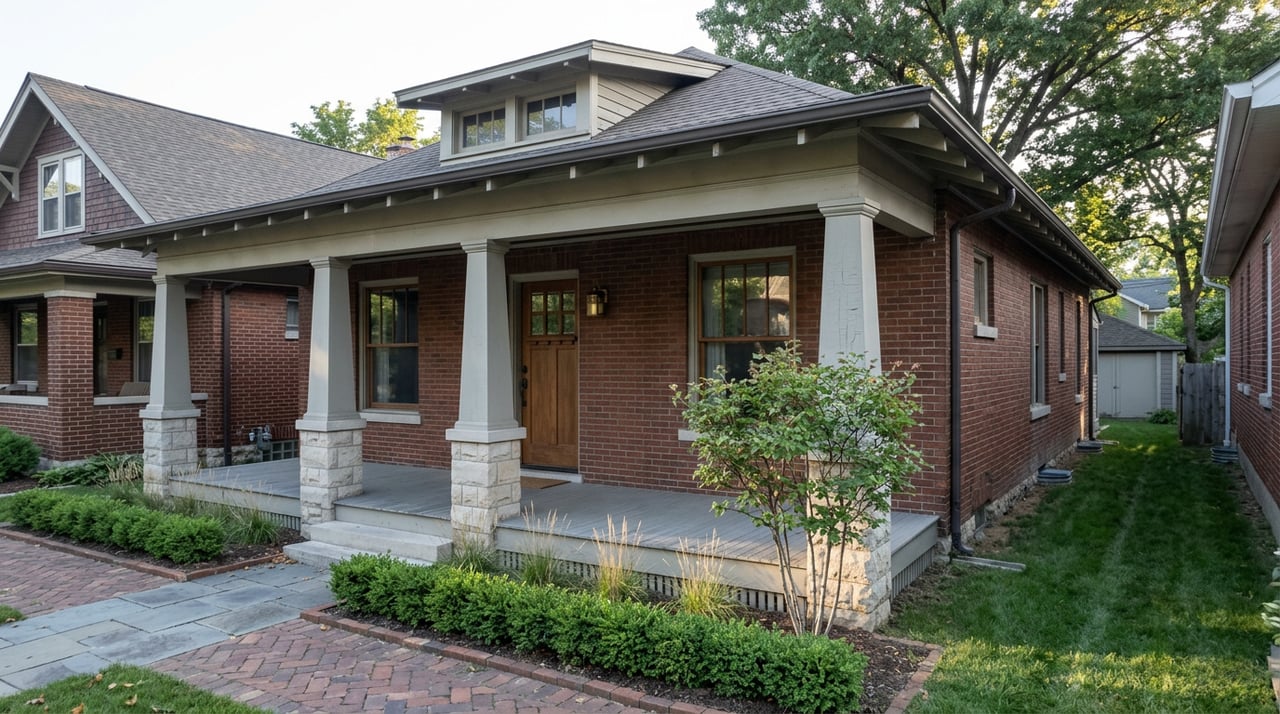
Sunnyside's housing stock traces back to the neighborhood's original building boom, when Northwest Denver filled in with rows of Craftsman bungalows and Denver Foursquares alongside the newer construction that has since arrived on the same blocks. One longtime owner's account of a Sunnyside home built in 1901, documented on the local history blog Denver Urbanism, is typical of the era that shaped these streets.
Under those foundations runs whatever sewer lateral material was standard when the house went in, and for most of the twentieth century in Denver that meant one of three things: clay tile, cast iron, or a wood-fiber pipe called Orangeburg that shows up mostly in homes from the 1940s through the 1970s. Each one ages differently, and none of them age like the PVC pipe that became standard after 1980.
| Pipe material | Typical install era | What tends to fail |
|---|---|---|
| Clay tile | Before the 1970s | Cracked joints, root intrusion |
| Cast iron | Early to mid-1900s | Internal corrosion, scale buildup |
| Orangeburg (wood fiber) | 1940s to 1970s | Softens, bellies, can collapse |
| PVC | Post-1980s | Rare, the modern baseline |
A house built in Sunnyside's original wave was almost certainly plumbed with the first three, not the last one.
What a standard home inspection never sees
A general home inspection follows a visual standard. The inspector looks at what's accessible: the roof, the panel, the water heater, the crawl space if there is one. Nobody on that walkthrough opens the ground between the house and the street.
A sewer scope is a separate service. A technician feeds a waterproof camera through the cleanout and runs it the length of the lateral, sometimes fifty to a hundred feet, out to the city connection. It's the only way to see what condition that specific pipe is actually in, and it isn't automatically part of a standard inspection package. Someone has to order it on purpose.
That's the asymmetry that matters here. In a fast-moving Sunnyside sale, the buyer's side often orders the scope during their due diligence window, not before. Which means the first person to actually learn the condition of a century-old clay lateral is frequently the buyer's inspector, not the seller.
The cost gap that makes the timing expensive
If a scope catches early root intrusion in an otherwise sound clay line, a localized point repair can run from a few hundred dollars to a couple thousand. If the line has bellied, or if it's Orangeburg nearing the end of its service life, a full replacement commonly runs from around $5,000 up into the $15,000 range or higher, depending on length, depth, and how hard the pipe is to reach.
That's a wide enough gap that whoever discovers the problem first has real leverage over how the number gets settled. A seller who already knows the figure can price around it or fix it on their own schedule. A seller who learns it from a buyer's inspection report during a tight closing window is negotiating from a much weaker position, often with a lender's appraiser now watching the same defect.
Colorado's disclosure rule doesn't care when you found out, only whether you knew
Colorado sellers complete a Seller's Property Disclosure form as part of the standard purchase contract. The current version, SPD19, became mandatory for use starting January 1, 2026, and runs fourteen pages across eighteen lettered sections. It asks for the seller's current actual knowledge, not a guarantee and not a substitute for an inspection.
Underneath that form sits an older common-law rule. A 1960 Colorado Supreme Court case, Cohen v. Vivian, established that a seller who actually knows about a latent defect has a duty to disclose it, regardless of what the contract says about buying the property as-is. The duty doesn't stop once you sign the SPD, either. If something new comes to light before closing, the buyer gets a right to walk away within five days of learning about it.
The form doesn't ask what your plumbing might do someday. It asks what you know today. A pre-listing scope is how you make sure the answer is complete before someone else finds out first.
That five-day clock is exactly why timing is the whole story here. A scope ordered in the second week of a listing turns an unknown pipe into a documented fact you disclose on your own terms. A scope forced by a buyer's inspector in the fifth week turns the same fact into a countdown that starts on somebody else's schedule.
What changes when the seller scopes first
Ordering a sewer scope before a Sunnyside listing goes live does three concrete things.
- It replaces an unknown with a priced, documented fact, which means you decide whether to repair it, price it into the listing, or disclose it and sell as-is with a number attached rather than a guess.
- It keeps the timeline inside your control instead of the buyer's Inspection Objection window, where a discovery can stall a closing that was otherwise moving fast.
- It gives serious buyers a dated video and, if needed, a written repair estimate up front, which is the kind of documentation that closes a deal instead of reopening one.
For a house built when Sunnyside was first filling in, that scope is a small cost against the alternative of finding out the hard way. A basic scan runs a few hundred dollars in most cases, less than the cost of most cosmetic prep work sellers already budget for before photos go up.
FAQ
Does my regular home inspection already check this? No. A standard inspection is a visual check of accessible systems. The sewer lateral runs underground between the house and the street, and seeing its actual condition requires a separate camera scope.
What if the scope finds a problem? Am I required to fix it before I list? Colorado law doesn't require repair. It requires disclosure of what you know. Once you have the scope results, you can choose to fix it, price the home to reflect it, or disclose it as-is with documentation attached. What you can't do is stay silent about a defect you now know exists.
How old does a house need to be before this is worth doing? Most Denver plumbing and inspection sources point to pre-1980 construction as the threshold where clay, cast iron, or Orangeburg pipe becomes likely. Sunnyside's original housing stock, built largely in the early 1900s, sits well on the older side of that line.
If you're planning to list a Sunnyside home and want to know what a pre-listing scope, and the rest of a documented, buyer-ready file, looks like in practice, Kissel Group can walk through it with you before the sign goes in the yard.