If you've checked more than one site while researching homes in Golden this year, you've probably run into a strange problem. One source says prices are up more than 20 percent. Another says they're down close to 10 percent. A third puts the number somewhere in between and calls it flat. All three claim to describe the same small city between Clear Creek and the foothills, in the same stretch of 2026.
None of these sites are wrong exactly. The issue is that Golden isn't a normal housing market, and treating its reported median like you would Denver's or Arvada's will send you chasing a number that doesn't mean what you think it means. The real explanation runs through a three-decade-old ballot measure that still limits how many new homes the city can add each year, paired with a sales volume so small that a handful of closings can swing the median by six figures without anything about the market actually changing. Once you see both pieces, the contradictory numbers stop being confusing and start being useful.
Four Sources, Same Market, Same Year
Here's what shows up if you pull data on Golden home prices right now.
| Source | What it measures | Time window | Figure | Year-over-year |
|---|---|---|---|---|
| Redfin | Median sale price | March 2026 | $1.1 million | up 21.1% |
| Orchard | Median sold price | Trailing 30 days, ending late April 2026 | $965,000 | down 6% |
| Movoto | Median list price | June 2026 | $920,000 | down 9% |
| Zillow | Average home value estimate | Current 2026 | $869,423 | down 0.7% |
Part of this is methodology. A median sale price, a median list price, and an algorithmic value estimate are three different measurements that happen to get reported as one thing. Part of it is geography. Redfin's March count included only 10 closings. Orchard's 30-day window counted 63. That's too large a gap to explain with seasonal timing alone. It suggests the two platforms are drawing different boundaries around what counts as "Golden," pulling in a different mix of zip codes or a wider unincorporated radius around the city limits.
A Market Too Small to Trust a Single Median
The clearest evidence that Golden runs on a thin market shows up in the direction of days on market, not just price. Redfin's numbers show average time on market slowing slightly, from 8 days a year earlier to 10 days in March 2026. Orchard's numbers over its own window show the opposite, days on market dropping from 8 to 4. Two datasets, same city, same rough period, opposite conclusions about whether the market is speeding up or slowing down.
This isn't a data error so much as a feature of how few transactions Golden generates in any given month. When only 10 to 63 homes close, one late-arriving luxury sale on a foothill lot or a small cluster of entry-level condos closing together can move a reported median by tens of thousands of dollars without any actual shift in what a typical home is worth. A market this size doesn't average out its outliers the way a larger city does.
What holds steadier across sources is competition. Redfin scores Golden 82 out of 100 for competitiveness and reports an average of 6 offers per home. Orchard's window shows 38.1 percent of homes selling above list price, up 1.7 points year over year, with a 100 percent sale-to-list ratio matching the prior year. Read the price direction with real skepticism. Read the offer counts and sale-to-list ratio as the steadier signal.
The Ordinance Behind the Squeeze
The deeper reason Golden behaves like a small, tight market rather than a typical Denver suburb goes back to a 1995 ballot measure. Golden voters approved a cap limiting the city's growth in residential units to just 1 percent per year. Run that percentage against Golden's roughly 7,782 households, a figure from the U.S. Census Bureau, and you land close to the 88 new homes the city was on track to allow in 2023, the year Colorado Public Radio reported on the cap ahead of a statewide fight over these ordinances.
That fight came in the form of House Bill 23-1255, a state law signed by Governor Jared Polis that preempts local ordinances explicitly limiting the number of residential building permits a city issues in a given year. Lakewood and Boulder, the state's other long-running growth-cap cities, moved to repeal their caps in response. Golden did not. According to the Colorado Sun's reporting from August 2023, the Golden City Council held a closed session with its attorney and took no action, leaving the city's direction unclear. Nothing in the public record since then shows that status has changed. For a buyer trying to gauge whether more inventory is coming, the honest answer is that the mechanism holding supply down has an uncertain legal future and, as of this writing, is still standing.
What the Cap Doesn't Reach
The 1 percent cap governs new residential permits, not everything that adds housing capacity in the city. Golden's zoning code is currently being revised in response to a separate set of 2024 state land-use laws covering accessory dwelling units, parking minimums, occupancy limits, and transit-oriented development standards. That process, tracked through the city's Guiding Golden planning site, means a homeowner on a qualifying lot, particularly larger R-2 zoned parcels, has a real path to adding a rental unit or multigenerational space that doesn't run through the same permit ceiling as ground-up subdivision. If you're weighing Golden against another suburb for its rental-income potential or space to add on, that distinction matters more than the median price does. Renovation and addition permits, separate from the growth cap, are outlined through the city's building permit guide.
The Median Hides Four Different Markets
Part of why one number can't summarize Golden is that "Golden" isn't one housing market. It's several, sharing a city limit and a single reported median.
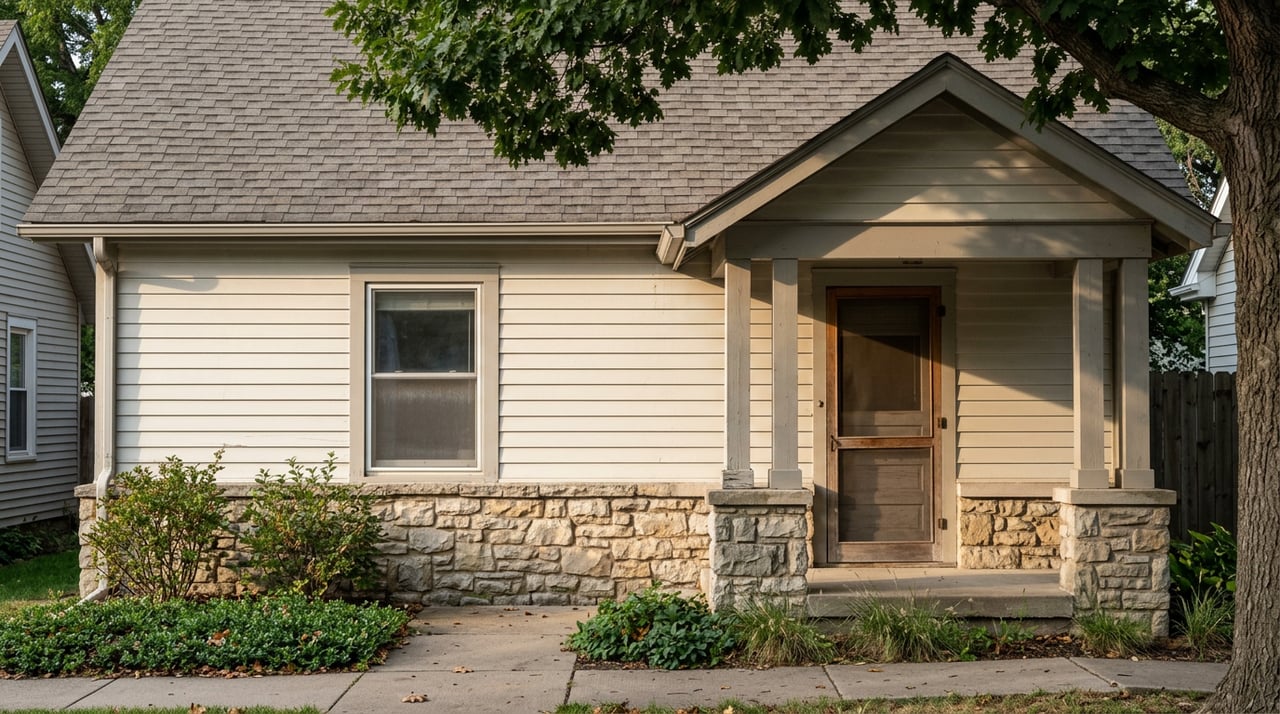
- Historic cottages in downtown Golden proper, the oldest and smallest housing stock in the city
- Rental and investment condos near Colorado School of Mines, priced for student tenants and cash-flow buyers rather than owner-occupants
- Larger lots zoned R-2, some over half an acre, where an accessory dwelling unit is a realistic option
- Foothill and mountain-view estates in areas like West Pleasant View, Applewood Mesa Ranchettes, and North Table Mountain Village
Citywide, listing prices span from around $250,000 up past $3 million. Condos and townhomes alone run from the low $200s to the high $800s before HOA fees. A median drawn from that spread tells you almost nothing about what a specific buyer will pay, because it's averaging a Mines-area rental condo against a custom estate with mountain views and treating the result as a single data point.
What This Means If You're Comparing Golden to Other Suburbs
If you're shopping Golden against a suburb like Arvada or Broomfield, three adjustments make the comparison honest. First, ask which submarket a quoted median actually reflects, since a $920,000 figure means something different if it's drawn from foothill estates than if it includes Mines-area condos. Second, weight days on market and sale-to-list ratio more heavily than the reported price trend, since those numbers move less erratically in a thin market. Third, remember that Golden's supply constraint isn't the same kind of market friction you'd find in a suburb without a permit cap. A city where new listings can respond freely to demand behaves differently than one where the city itself has capped how many new homes can be added, regardless of how many buyers show up. For broader context on how Golden's numbers compare to the wider region, REcolorado, the Denver Metro area's MLS, publishes a monthly market report worth checking against any single-city figure.
FAQ
Is Golden's 1 percent growth cap still in effect in 2026? The most recent independent reporting on this, from August 2023, found that Golden had taken no action to repeal or bring its ordinance into compliance with the state's preemption law, unlike Lakewood and Boulder. No public record found in our research shows that status has since changed. Treat the cap as a live constraint on new supply until the city states otherwise.
Does the cap mean I can't add square footage to a home I already own? No. The cap limits new permits for ground-up residential development. It doesn't block renovations or additions, and in many cases doesn't block accessory dwelling units on qualifying lots, a category the city has been actively revisiting as part of its ongoing zoning code update.
A single median price was never going to tell you much about a market built this way. If you're weighing Golden against another part of the metro, the numbers worth trusting are the ones that hold up across sources, not the headline figure that changes depending on which site you happened to open. If you want someone to walk through what a specific Golden submarket actually looks like right now, Work with Madison + The Kissel Group.