
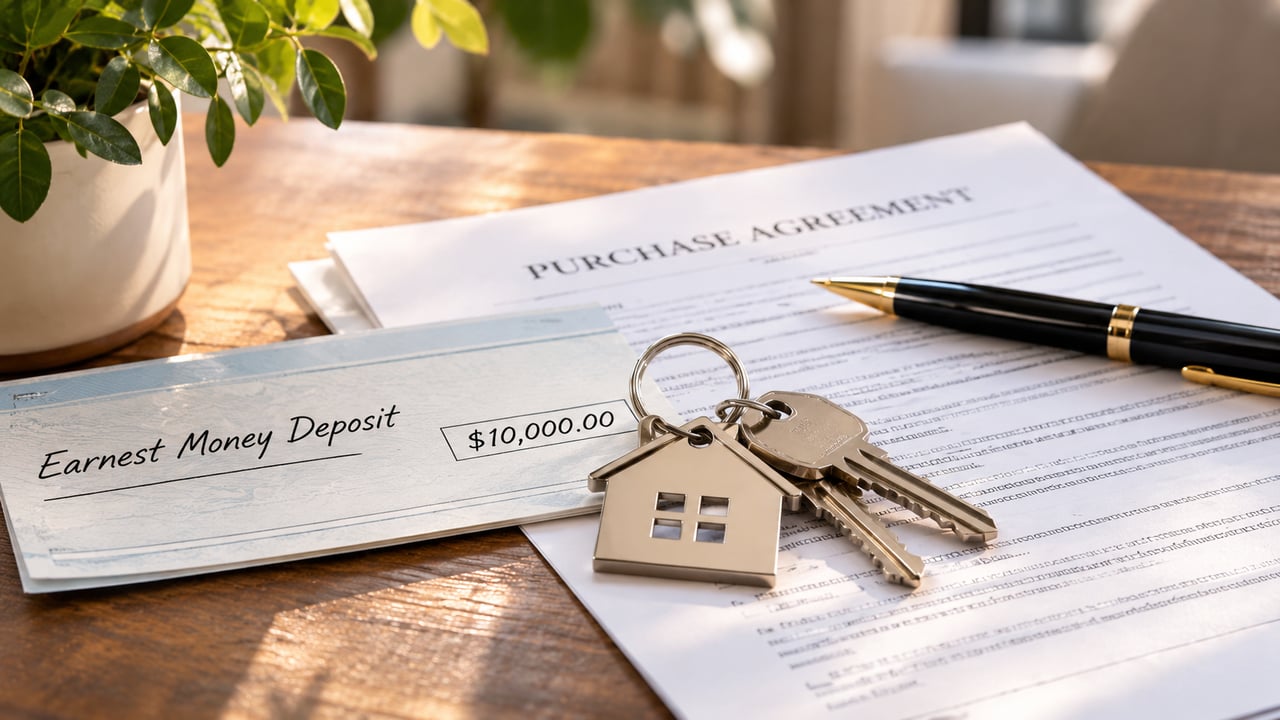
Before you hand over your deposit, let's talk about what earnest money actually means, where it goes, and when you might get it back.
You've found a home you love, you're ready to submit an offer, and then your real estate agent starts talking about something called earnest money.
Wait, what exactly is that? Is it another fee? Is it part of your down payment? And what happens to that money if you decide not to buy the house?
These are questions I hear from buyers all the time, especially those purchasing their first home.
And they're great questions!
Earnest money is a normal part of the homebuying process here in Colorado, but it's also something you want to understand before making an offer.
So, let's break it down.
First Things First: What Exactly Is Earnest Money?
Think of earnest money as a good-faith deposit.
When you make an offer on a home, you're telling the seller that you're serious about purchasing their property. Earnest money is one way of demonstrating that commitment.
Once your offer is accepted, you'll typically be required to deliver an agreed-upon amount of money to the party designated in your purchase contract.
In many Colorado transactions, that's a title company or another agreed-upon earnest money holder.
The money is held while you work through the steps between going under contract and closing.
And here's the part that often surprises buyers:
Earnest money isn't necessarily an additional cost of buying a home.
If everything goes according to plan, it's generally credited toward the funds you owe at closing.
How Much Earnest Money Do You Need in Colorado?
Here's something important to know: Colorado doesn't have a universal fixed earnest money amount for every home purchase.
The amount is negotiated between the buyer and seller.
You may hear people reference 1% to 3% of the purchase price as a general starting point, but that isn't a legal requirement or a rule that applies to every transaction.
The amount can vary depending on the price of the home, market conditions, the seller's expectations, and the overall terms of your offer.
For example, let's say you're purchasing a home for $600,000.
If you and the seller agree to a 1% earnest money deposit, that would be $6,000.
If you agree to 2%, that would be $12,000.
Neither amount is automatically better.
The right strategy depends on the property, the competition, your financial comfort level, and the other protections included in your offer.
I always want my buyers to understand exactly what they're committing to rather than simply choosing a number because it sounds competitive.
Where Does Your Earnest Money Actually Go?
Your earnest money generally doesn't go directly into the seller's personal bank account.
Instead, it's delivered to the earnest money holder named in your contract.
That party is responsible for handling the funds according to the applicable agreement and requirements.
Your contract will also specify when the deposit must be delivered.
And that deadline matters!
If your contract requires earnest money by a particular date, you don't want to miss it.
One more important reminder: Always independently verify wiring instructions using a trusted phone number before sending money. Real estate wire fraud is a very real concern, and emailed wiring instructions should never be trusted without verification.
Does Earnest Money Go Toward Your Down Payment?
In many cases, yes!
Your earnest money is generally credited toward the total amount you need to bring to closing, which may include your down payment and closing costs.
Let's look at a simple example.
Purchase price: $600,000
Planned down payment (10%): $60,000
Earnest money already deposited: $10,000
In this simplified scenario, the earnest money would be credited toward the funds due at closing, leaving $50,000 toward the down payment.
Of course, your actual amount due at closing will also account for closing costs, lender requirements, prorations, credits, and other adjustments.
Your lender and title company will help determine the final amount.
Can You Get Your Earnest Money Back if You Change Your Mind?
This is probably the most important question of all.
And the answer is: It depends on your contract and why you're terminating.
Colorado purchase contracts often include provisions that allow buyers to terminate under certain circumstances, provided they follow the required procedures and deadlines.
These may involve inspection concerns, financing, appraisal issues, title matters, or other contractual provisions.
For example, if you discover a major issue during the inspection period and properly exercise an applicable termination right before the deadline, your contract may provide for the return of your earnest money.
But that doesn't mean buyers can cancel for any reason, at any time, and automatically receive their deposit back.
If you miss a deadline, fail to follow the contract's notice requirements, or default on your obligations, your earnest money could be at risk.
And even when a buyer believes they're entitled to the deposit, disagreements can arise over its release.
This is why I take contract deadlines so seriously.
What Happens if the Seller Cancels?
The answer depends on the circumstances and the terms of the purchase agreement.
If a seller fails to perform their contractual obligations, the buyer may have remedies under the contract.
However, earnest money isn't automatically released just because one party believes the other has breached the agreement.
The specific facts, contract language, and applicable procedures matter.
When a dispute arises, legal guidance may be necessary.
Is Offering More Earnest Money a Good Strategy?
Sometimes!
A larger earnest money deposit can demonstrate financial commitment and potentially make an offer more appealing to a seller.
But I wouldn't recommend increasing your deposit without first considering the bigger picture.
A strong offer isn't just about the amount of earnest money.
It's also about financing, price, contingencies, deadlines, closing terms, and how confidently you can perform under the contract.
And remember, the larger the deposit, the more money you may have at risk if something goes wrong and you don't have a valid contractual basis for recovering it.
My approach is to help buyers make competitive offers without taking unnecessary risks.
Those two goals should always work together.
The Bottom Line: Understand Your Deposit Before You Make an Offer
Buying a home is exciting, and when you find the right one, it's easy to want to move quickly.
But earnest money is one of those details that deserves a little extra attention.
You should understand how much you're depositing, where the money is going, when it's due, and what circumstances may allow you to recover it.
The goal isn't simply to get your offer accepted.
It's to get your offer accepted with terms you understand and feel confident about.
Thinking about buying a home in Denver, Arvada, Lakewood, Wheat Ridge, Highlands Ranch, or the surrounding Colorado communities?
I'd love to help you understand the process, build a thoughtful offer strategy, and navigate the details that come with purchasing a home.
Because buying a home should feel exciting, not confusing!