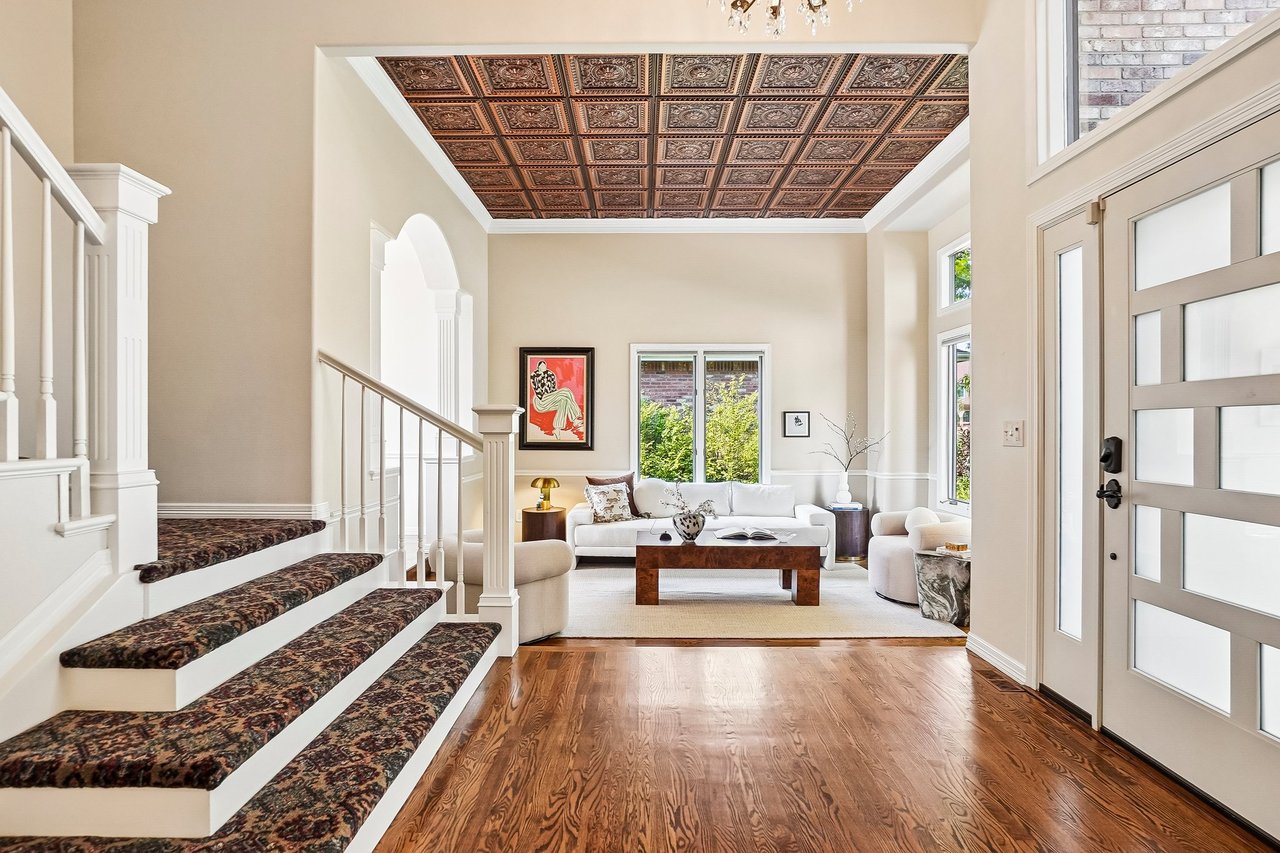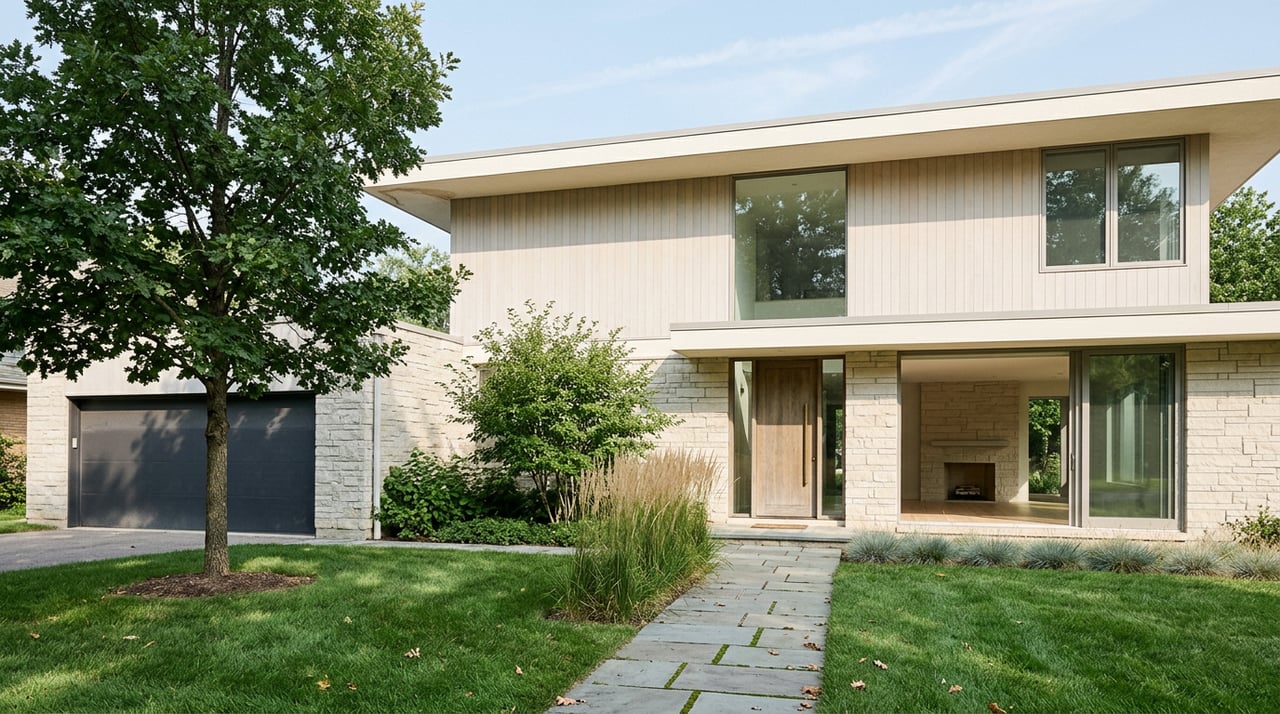
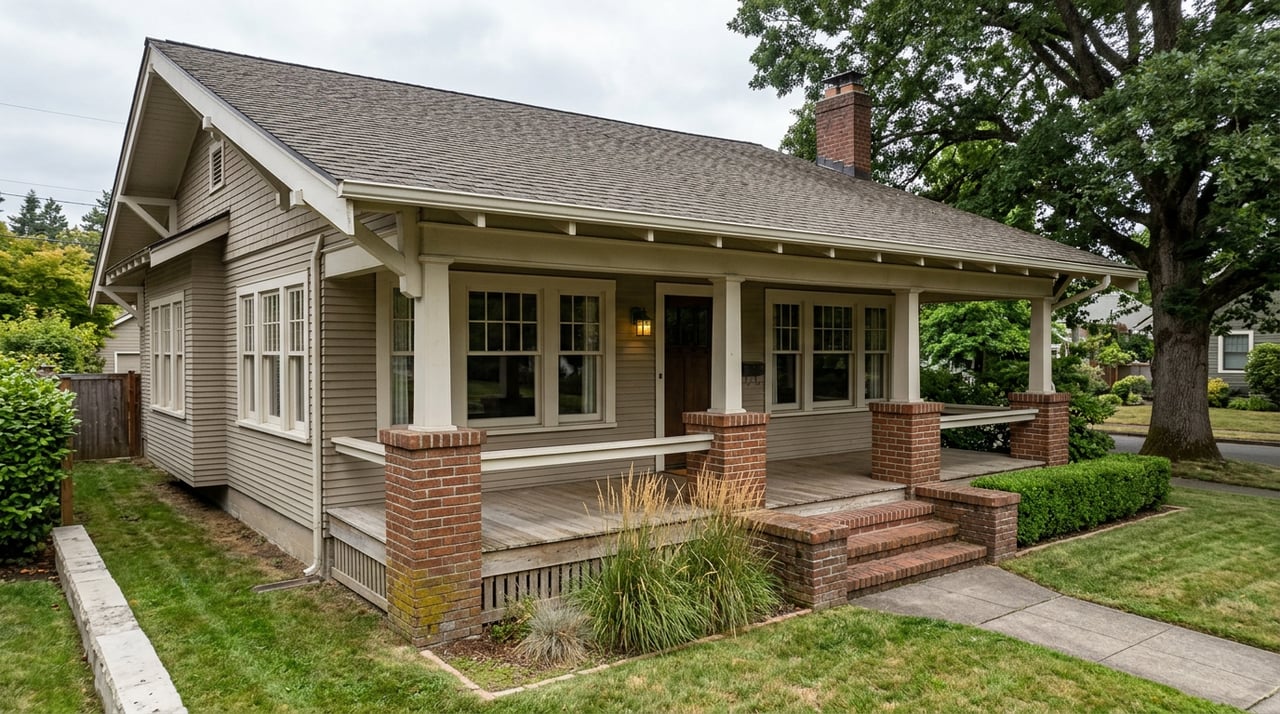
Two brick cottages sit three doors apart in Golden's 12th Street Historic District. Last spring, one owner gutted a kitchen down to the studs, swapped every appliance, and never filed a single form with the city. The owner two doors down spent months revising drawings for a covered back porch because the addition changed a roofline visible from the sidewalk, and that change had to go in front of Golden's Historic Preservation Board before a shovel touched the ground.
Same district. Same era of construction. Completely different process. The difference wasn't the size of the project or the cost of the materials. It was whether the work could be seen from the street.
That distinction is the part most renovation guides skip, and it's the part that actually determines whether your timeline holds. If you're buying, selling, or planning work on a home inside one of Golden's three historic districts, the label "historic district" doesn't mean the whole house is under review. It means a specific, narrower set of exterior changes are, and knowing exactly where that line sits changes how you plan, price, and market the property.
The Line Golden Actually Draws
Golden has three locally designated historic districts: 8th and 9th Street, 12th Street, and East Street. The city's preservation program dates to 1983, when the 12th Street district became the first to earn National Register status. Since then, the city has added individually designated sites throughout Golden, some inside the mapped districts and some standing alone.
Here's the part that surprises most buyers: the city's own renovation guidance is specific about scope. Most exterior alterations to a building within an established historic district, or on a locally designated site, require a Certificate of Appropriateness review by the Historic Preservation Board. That word, exterior, is doing a lot of work. It's the reason one neighbor could remodel a kitchen without a form while the other needed board sign-off for a porch roofline.
There's a second layer of nuance that matters even more for anyone shopping in these districts. Not every structure inside the boundary lines carries the same weight. Golden's register tracks both contributing and non-contributing structures, and non-contributing buildings show up both inside and outside the mapped districts. In plain terms, being inside the 12th Street or East Street boundary doesn't automatically tell you which rulebook applies to your specific address. A later addition, a heavily altered facade, or a structure built after the district's period of significance can sit inside the lines and still be classified as non-contributing, which changes what review it needs. Before you write an offer, the question isn't just "is this in a historic district." It's "is this specific structure listed as contributing."
What Actually Lands in Front of the Board
Two project types carry the heaviest documentation load, and both are worth knowing before you fall in love with a listing.
The first is new construction or a facade change. That requires a context study, meaning photographs and architectural descriptions of the surrounding structures within a two block radius or within the specific historic district. It's not a quick sketch and a permit fee. It's a documented case for why the new work fits the block it's joining.
The second is demolition. A Certificate of Appropriateness for demolition applies to structures inside one of the three districts, individually designated sites, or any nonresidential structure over 50 years old. The application carries a $500 fee per property and requires a letter of intent explaining the reason for demolition, an existing conditions report with a professional structural assessment, and historical documentation of the site.
This isn't abstract. In February 2025, Golden's Historic Preservation Board held a public hearing to review a Certificate of Appropriateness for a rear addition at 1815 East Street, inside the East Street Historic District. That's a real address, a real board agenda, and a real timeline that homeowner had to build into their renovation plan before permits could move forward.
A rear addition, a demolition, and a new facade all trigger different paperwork. A repainted door usually doesn't.
If you're evaluating a fixer in one of these districts, the size of your project determines which of these paths you're on, and the paths are not interchangeable in terms of time or documentation.
Why the Same Rule That Slows You Down Can Also Pay for Itself
Here's the piece most buyers never factor into their math. Federal and state tax incentives exist specifically for historic preservation projects that follow the Secretary of the Interior's Standards for Rehabilitation, and preservation tax credit applications for Golden properties run through History Colorado, the same statewide agency that administers the program everywhere else in the state. Colorado's historic preservation tax credit can offset roughly 20 to 25 percent of qualified rehabilitation costs on a contributing property, generally claimed over several years rather than all at once.
That means the same designation that requires a context study for your addition or a structural report for a demolition can also return a meaningful share of what you spend rehabilitating the place, provided the work is documented correctly from the start. A buyer comparing a contributing home in the East Street district against a similar, non-designated home a few blocks away shouldn't just price in the review process as a cost. They should ask whether the renovation they're planning would qualify for the credit, because that changes the real math on the project.
Before you write an offer on a home inside one of Golden's three historic districts, work through this list:
- Confirm whether the specific structure is listed as contributing or non-contributing, not just whether the address falls inside the mapped boundary.
- Ask the seller for any Certificate of Appropriateness history tied to the property, approved or still pending.
- If an addition or facade change is part of your plan, build the two-block context study into your renovation timeline before you assume a permit date.
- Price the state tax credit into your renovation budget rather than treating the designation purely as a constraint.
What This Means If You're Selling a Contributing Home
If you own a contributing structure and you're weighing a sale, the documentation you already have becomes part of your listing story. Buyers shopping in Golden's historic districts are used to hearing "historic" and assuming friction. A file that already includes an existing conditions report, any prior Certificate of Appropriateness approvals, or clear notes on which parts of the structure are original versus altered gives a buyer's agent something concrete to work from instead of starting the research from zero during their due diligence period.
That kind of preparation is also where a team built around in-house listing marketing earns its keep. Packaging a property's preservation history alongside its market comps, rather than leaving a buyer to discover the review process after they're under contract, is the difference between a listing that reads as a project and one that reads as an opportunity.
FAQ
Does the historic district review apply to interior remodels? Golden's own guidance ties the Certificate of Appropriateness requirement to exterior alterations on buildings within the districts or on locally designated sites. Interior work that doesn't change the outside of the structure typically falls outside that specific review.
My house sits inside one of the three district boundaries. Does that automatically make it "contributing"? No. Golden's preservation program tracks both contributing and non-contributing structures, and non-contributing buildings exist inside the mapped districts as well as outside them. The boundary line alone doesn't answer the question. You need to check the specific structure's status.
What triggers the $500 fee? That fee applies specifically to a Certificate of Appropriateness for demolition, assessed per property. It's not a blanket charge for every exterior COA review.
Does the tax credit only apply if the current owner did the historic designation work themselves? The credit is tied to the qualifying rehabilitation project itself, not to how long the current owner has held the property. If the renovation follows the Secretary of the Interior's Standards and the structure carries contributing or designated status, the application process runs through History Colorado regardless of who owned the home when the designation was first recorded.
If you're weighing a purchase inside Golden's historic districts, or you're sitting on a contributing property and wondering how to position it for sale, Kissel Group works through these details with clients before an offer gets written, not after. Work with Madison + The Kissel Group to see what a specific property's history actually means for your timeline and your budget.